Entering data into a web site is possibly the most common task that is performed. In my time designing and developing sites, I’ve seen good forms and I’ve seen bad forms. The biggest sin with these forms has always been error messages. Web sites are designed to communicate a message. Whether it’s the day’s news or that a friend is having a party, the message must be clear an unmistakable. With errors, correct placement, styling and reference are essential. I’m going to show you how not to do it, and then best practice error messages.
Opera 9.5 is has now been released. The browser underdog (and my personal favorite) now has more features than ever! It's also faster (see my SlickSpeed test article) and includes lots more CSS3 features including media queries, full selectors capabilities and new properties like text shadows and box sizing.
Recently, I've been asked a lot of questions about CSS and my commitment to it. I'm a purist when it comes to the web. I firmly believe that the only way to create a web site is to use standards-compliant CSS that is cross-compatible with all major browsers. Javascript should only be used as a progressive enhancement technique and should certainly not be relied upon (yes, I'm looking at you ASP .NET). Most of my colleagues regard this stance as noble, but somewhat stupid in the "real world", where it's not always getting it done "right", it's just getting it done. Why is CSS considered such a black art?
With the impending release of Firefox 3, a new chapter to "browser wars" is upon us. In this short series, I'll be looking at what each browser offers to a user, and hopefully pick a champion.
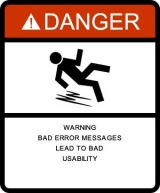 Entering data into a web site is possibly the most common task that is performed. In my time designing and developing sites, I’ve seen good forms and I’ve seen bad forms. The biggest sin with these forms has always been error messages. Web sites are designed to communicate a message. Whether it’s the day’s news or that a friend is having a party, the message must be clear an unmistakable. With errors, correct placement, styling and reference are essential. I’m going to show you how not to do it, and then best practice error messages.
 Just a quick message to say that Firefox 3 will be released today at 10am PDT (6pm BST if you're in the UK like me).
 Recently, I've been asked a lot of questions about CSS and my commitment to it. I'm a purist when it comes to the web. I firmly believe that the only way to create a web site is to use standards-compliant CSS that is cross-compatible with all major browsers. Javascript should only be used as a progressive enhancement technique and should certainly not be relied upon (yes, I'm looking at you ASP .NET). Most of my colleagues regard this stance as noble, but somewhat stupid in the "real world", where it's not always getting it done "right", it's just getting it done. Why is CSS considered such a black art?